```html
When you hear the term Customer Relationship Management or CRM, you probably think of CRM software. But the concept of CRM is larger than the software companies use to manage relationships. Customer relationship management also includes interpersonal interactions with customers that take place personally or outside of your CRM software.
CRM is in a state of rapid evolution and transition. The days when companies used CRM software to communicate with every customer are over. In the coming years, you can expect significant changes in CRM software and how companies use them.
Predicting changes in customer relationship management systems helps you get ahead of your competitors. In this article, we cover the key CRM changes you can expect to see in the future.
Understanding customers and data will improve customer relationships
Today's CRM software can capture and store a vast amount of customer information, from their birthday to their favorite color. You can use this data to create a deep understanding of who each customer is, what needs, interests, and challenges they have.
Companies will increasingly use this data to create personal relationships with their customers. This will lead to improved customer experience, higher levels of engagement, and increased customer loyalty.
CRM software will facilitate the alignment of sales, marketing, and customer service
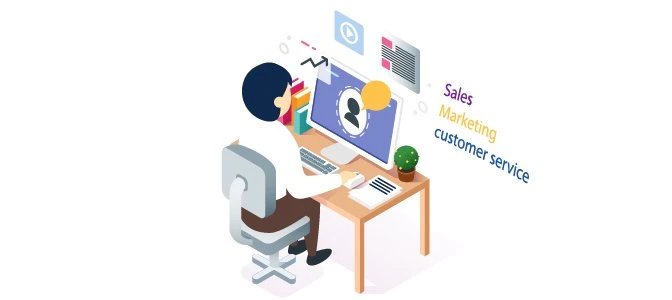
Businesses have realized that they need to align their sales, marketing, and customer service departments. When each team works in a separate system and data is stored in silos, each team has a different perspective of each customer.
Integrating these different systems so that all teams can work with a single source of truth is how each team perceives each customer. CRM software improves this collaboration and helps you deliver a consistent customer experience where everyone speaks to customers with a shared perspective.
Customer engagement will increase and retention will become more difficult
Customer retention is extremely important for any business. Acquiring a new customer costs at least five times more than retaining existing ones. You can expect more companies to use CRM software to achieve these goals. Additionally, new features are likely to be added to existing CRM systems to facilitate this.
Adding brand advocates and promoters will become very important
Brand advocates—also known as brand ambassadors—are people who love your product and recommend it to their friends and family. People trust recommendations from friends and family far more than information they read online.
Customer relationship management will increasingly focus on identifying and nurturing brand advocates. Social feedback tools will evolve and be added to CRM software. This increases your ability to get alerts when someone mentions you on social media. This is an excellent opportunity to engage with a potential brand advocate.
Competition among CRM software providers will continue
The number of companies offering and developing CRM software has grown significantly in recent years, and we can expect this to continue.
What does this mean?
Lower CRM software tariffs and customer relationship management systems.
Lower costs will make it easier for a company to switch to another CRM provider. With cheaper options available, providers will have to work harder to retain their customers.
CRM software will become more intuitive and user-friendly

Initially, CRM software and customer relationship management systems were more or less complex. They required extensive training to manage the system effectively. However, CRMs have become much more user-friendly.
Drag-and-drop graphical templates are becoming the norm. As systems become more intuitive, the learning curve shortens.
This is great for users, but it also means that providers must focus more on educating users to get the most out of the system. Since the learning curve is shorter, customers can also easily decide to switch providers if they are not satisfied with their CRM system provider.
CRM service providers will hire top talent for their internal management
It is very common for a CRM specialist to use the same process for interacting with all customers. The problem is that every business is different and should be trained in a unique way. This type of approach reduces system usage and eventually drives customers away.
CRM service providers will seek to hire more top talent to avoid this issue. These specialists must spend time asking detailed questions and developing business strategies to understand new customers. They must have a comprehensive understanding of various industries to ask the right questions and train new users on how to use the system according to their needs.
Hiring employees who can do this will lead to higher levels of system usage and ensure that each customer successfully uses their CRM software and maximizes their return on investment.
All-in-one CRMs will enter the competitive market
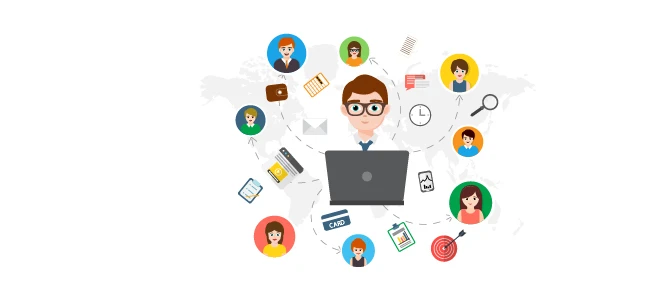
All-in-one CRMs are a relatively new concept. Since teams work in different systems and store separate datasets in silos, CRM providers began adding fragmented data collection capabilities into a core CRM system.
All-in-one CRMs include traditional CRM features along with sales, marketing automation, and support modules in one platform. This saves time, reduces costs for customers, and helps teams align with shared business goals.
All-in-one CRMs improve data quality and your team’s ability to deliver a consistent customer experience.
CRM integration allows companies to work in a unified system
Many CRMs now have the ability to interact with external applications and systems. This allows users to perform more activities within the same system. When a business uses an integrated CRM, they can complete almost all operations in one system.
This saves users time because they don’t have to constantly switch between applications to perform different activities.
Personalization will become more important and easier
With all the information you can now store about each customer, personalization becomes easier, especially in marketing. You can expect new features to be added to CRM software that simplify personalization. This is an inevitable aspect of the future of CRM.
This is good news because consumers increasingly expect a personalized customer experience. The one-size-fits-all strategy will fade, and personalization will take its place.
Artificial intelligence and machine learning will not soon become an integral part of CRM software
 Artificial Intelligence (AI) and Machine Learning (ML) are hot topics today. Yes, I know many predict that CRM providers will quickly integrate them into their solutions. However, I will disagree here.
AI and ML still have a long way to go and cannot compete with CRM functionalities anytime soon. This technology will eventually reach a point where it meets expectations, but it is not predicted to happen soon.
Social CRM will continue to grow
Social CRM refers to the practice of managing customer relationships through social media channels. The use of social media increases every day. This trend will continue.
Many CRM solutions already include social CRM capabilities. They help you monitor social channels for brand mentions so you can respond quickly and engage potential customers. You can use social CRM features to schedule posts, manage customer complaints on social media platforms, engage prospects, and more.
Additionally, some CRM software also includes lead generation capabilities. Social CRM is on the rise, and you can expect future CRM software to bring more features and make them easier to use in their products.
Conclusion
If we were to highlight just one lesson from this article, the future of CRM software will revolve around the customer and their needs. CRM software providers will introduce new features that allow end users to upgrade their CRM to improve customer experience.
With growing competition and falling prices, it is essential for companies to leverage their CRM solutions to retain customers, increase satisfaction, and build loyalty. CRM providers understand this and are already planning to evolve their systems to facilitate better customer experiences.
Do you have predictions about the future and evolution of CRM?