Frequently Asked Questions
E-government refers to the use of information and communication technology (ICT) to provide government services to citizens, businesses, and other government entities. The goal of implementing e-government is to improve efficiency, transparency, accountability, and access to government services. The benefits of e-government include reduced costs, increased revenue, improved service quality, increased citizen satisfaction, and improved decision-making.
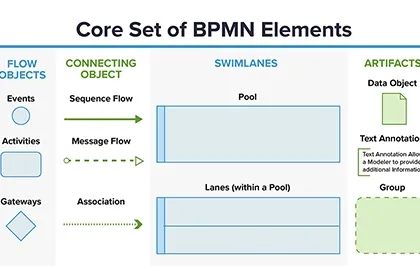
Business Process Management (BPM) is a management approach that focuses on optimizing organizational processes. BPM includes a set of activities that are performed to model, execute, monitor, and improve processes. In e-government, BPM can be used to automate tax, health, education, judicial, municipal, and other government services.
The challenges of implementing BPM in e-government include resistance to change, lack of knowledge and skills, process complexity, budget constraints, integration problems, and security issues.
The solutions for successful BPM implementation in e-government include setting clear goals, senior management support, forming a project team, selecting the right tool, accurate process modeling, process automation, continuous process monitoring and improvement, staff training, and change management.
BPM can help reduce corruption in e-government by providing more transparency in administrative processes, reducing bureaucracy and increasing the speed of service delivery, and increasing government accountability.